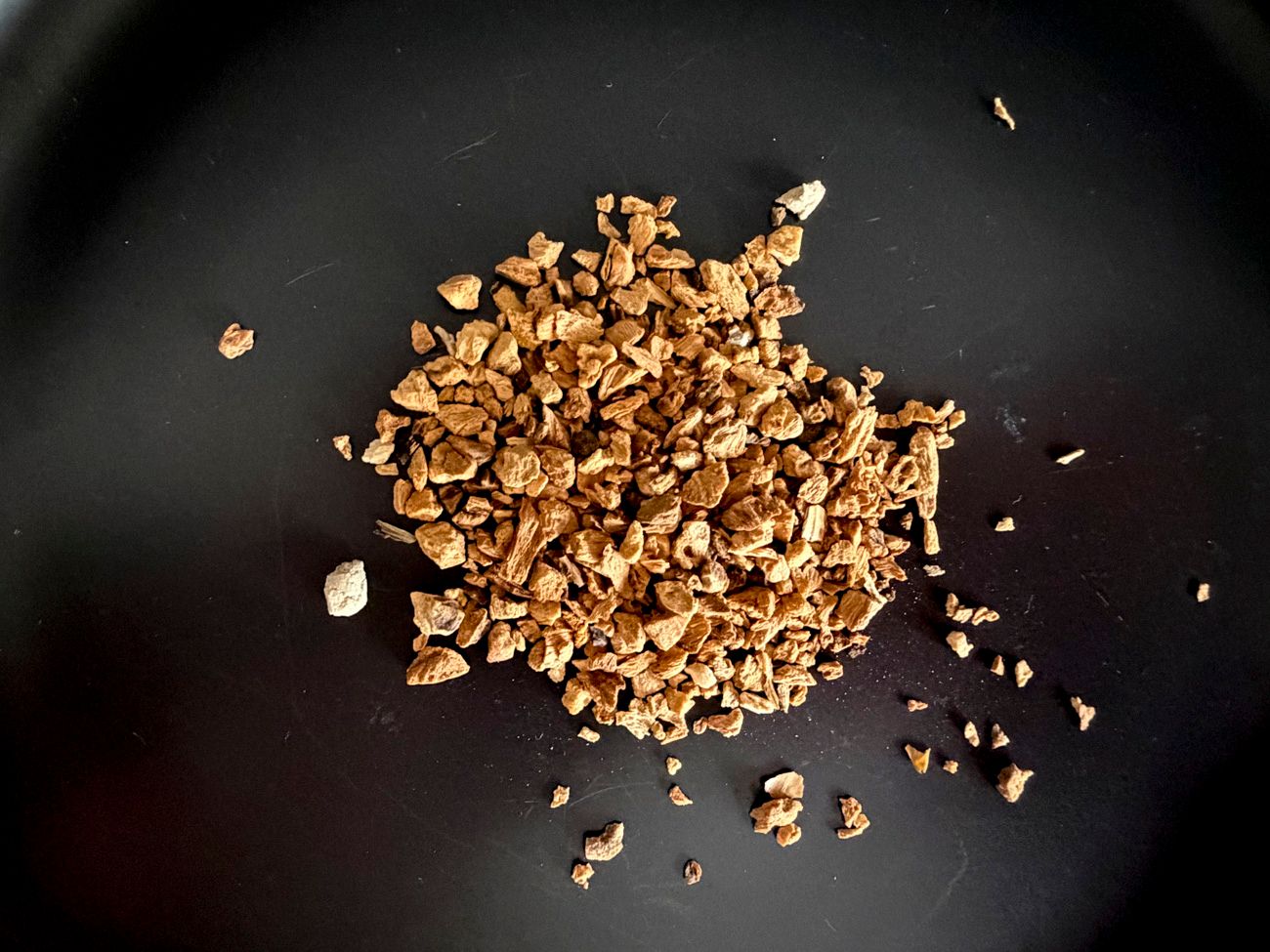
Gentian root is the classic bittering backbone. If a set of bitters tastes bitter, there's a good chance gentian is doing the work. It's the root of Gentiana lutea (yellow gentian), a tall alpine plant from the mountains of Europe. You've almost certainly tasted it already. It's a main ingredient in Angostura bitters, and it turns up in Campari, Aperol, and most amari and vermouths.
If you're building your own bitters, gentian is where a lot of people start, because it gives clean, deep bitterness without a lot of competing flavor.
What gentian tastes like
Bitter, but a specific kind. Gentian starts almost sweet and earthy, a little root-cellar and caramel, and then the bitterness arrives and stays, sitting on the back of the tongue long after you've swallowed. It's a deep, lingering bitterness rather than a sharp or sour one. That combination of a little sweetness up front and a long bitter finish is why it's the go-to bittering agent. It carries the bitterness without fighting the aromatics you build around it.
First-hand note (to add after my batch matures): my own tasting of the single-herb gentian tincture, how bitter it reads on the 0–5 scale, and how long the finish actually runs.
How to use it in bitters
Gentian is a bittering agent, not an aromatic. Its job is the bitter base; you layer aromatics like orange peel, cardamom, and spices on top of it. A little goes a long way. It's potent, so it's usually a small fraction of a blend. In the formulator, it's the intense-bitter anchor most blends are built from.
For an Old Fashioned–style bitters, pair it with orange peel for a bright top note. That's the combination a classic Old Fashioned is built on.
A note on safety
For most people, a dash or two of gentian from cocktail bitters isn't a concern. It's in products people drink all the time. But it has real cautions, and some people should avoid it:
- Skip it if you have stomach ulcers, acid reflux (GERD), gastritis, or hyperacidity. Gentian works by stimulating stomach acid and digestive secretions, which is the opposite of what those conditions need.
- Avoid it during pregnancy and breastfeeding. Reference sources advise against it, and it's traditionally been avoided.
- If you take medication for acid reflux or ulcers (a PPI, an H2 blocker, or an antacid), gentian works against it. Check with your pharmacist first.
None of this is medical advice, and it isn't a complete list. If you take any medication regularly or have a health condition, run it by your pharmacist or a drug-interaction checker before using gentian as anything more than an occasional cocktail bitter.
One sourcing note: buy gentian from a reputable supplier. In the wild, the root can be confused with toxic white hellebore, and contamination has been reported. That's one more reason to skip foraging and buy cut, labeled root.
Traditional uses
Gentian is one of the oldest bitter tonics in Europe. It's been used for well over 2,000 years, and it's named after Gentius, an ancient Illyrian king. European regulators (the EMA, and the older German Commission E) recognize gentian root as a traditional herbal medicine for digestive complaints like loss of appetite, fullness, and flatulence, based on long-standing use rather than modern trials. The proposed mechanism is the bitter taste itself: bitter compounds like amarogentin stimulate the nerves that trigger saliva, stomach acid, and bile.
Worth being straight about: this is traditional use, not clinically proven benefit. There aren't solid clinical trials showing gentian improves digestion. The case is history and tradition, not controlled studies. On this site, gentian earns its place as a flavor: it's the reason a good bitters tastes bitter. Its traditional role is context, not a health claim.
Where you've already had it
Even if you've never bought the root, you already know the taste. It's in a lot of what's behind the bar. Making your own bitters is just taking that flavor out of the bottle and putting it in your own hands.
Sources
- European Medicines Agency — Assessment report on Gentiana lutea L., radix. https://www.ema.europa.eu/en/documents/herbal-report/assessment-report-gentiana-lutea-l-radix-revision-1_en.pdf
- Gentian, Drugs.com professional natural-products monograph (citing the WHO monograph). https://www.drugs.com/npp/gentian.html