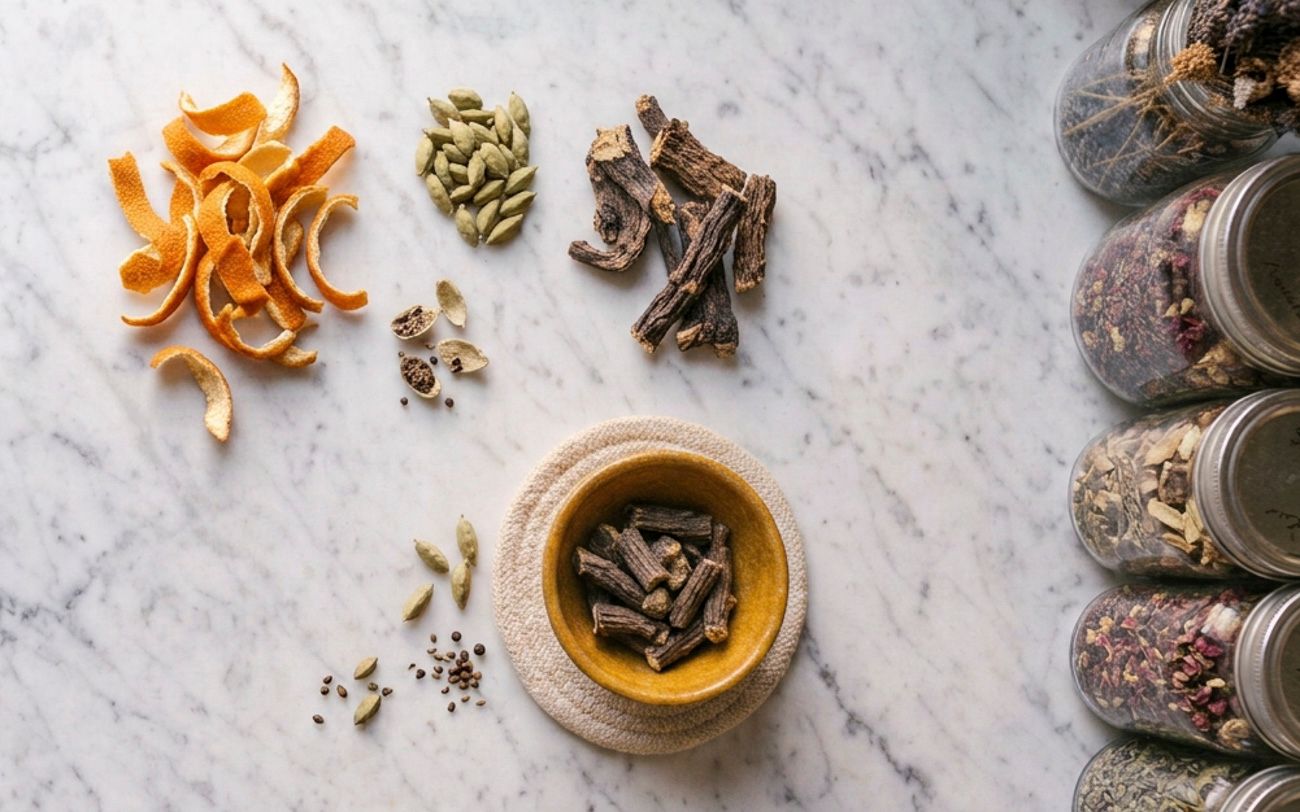
Bitters seem like something you have to buy, but they're simple to make: steep a bittering herb and a few aromatics in high-proof alcohol, wait a couple of weeks, and strain. That's the whole method, whether you're making classic aromatic bitters or something you came up with yourself.
This guide covers how a bitters blend is put together, what to steep it in, and the steeping process itself. Want an exact recipe to start with? There's one for an Old Fashioned. Want to design your own? That's what the formulator is for.
What bitters are
Bitters are a tincture: herbs steeped in alcohol until the liquid takes on their flavor, and above all their bitterness. In a drink, a couple of dashes work like seasoning, adding depth and pulling the other flavors together. A finished bottle is concentrated. You use it by the dash, never by the pour.
What goes in a bitters blend
Every bitters blend does two jobs, and once you can see them, the whole thing gets easier to build.
- A bittering agent is the backbone. It's where the bitterness comes from. Gentian is the classic choice, clean and deep. Wormwood and cinchona are two others, each with its own character. The bittering herb is usually somewhere between 10% and 50% of a blend.
- Aromatics are the flavor on top. Orange peel is the signature note in aromatic bitters. Warm spices like cardamom, cinnamon, and clove round it out, and from there you can reach for other citrus, herbs, or even a little dried fruit.
Get the backbone right, add one or two aromatics you like, and you have real bitters. Everything past that is taste. It's also exactly what the formulator is built for: pick your herbs and see how the blend will taste before you commit two weeks to a jar.
What alcohol to use
The alcohol is your menstruum: the liquid you're steeping in. It does more than carry flavor. The proof decides how much comes out of the herbs.
A neutral high-proof spirit like Everclear pulls the most, especially the aromatic oils in citrus peel and spices. A strong bourbon or rye works too, adding its own warmth. Aim for at least 80 proof (40%); higher extracts more. Plain vodka works in a pinch, but expect a softer, less aromatic result.
What you need
Same shape as above, laid out as a shopping list: a bittering herb, two or three aromatics, and a high-proof spirit.
- A bittering herb: gentian is the easiest place to start.
- Two or three aromatics: orange peel plus a warm spice or two.
- High-proof alcohol: enough to cover the herbs.
For the ratio, cover the herbs with about five times their weight in spirit. For a small batch that's roughly 20 g of herbs to 100 mL of alcohol. For exact amounts, dial a blend in the formulator, or start from the Old Fashioned recipe and adjust from there.
Tools
- A clean jar with a tight lid.
- A small muslin bag (optional, but it makes straining painless).
- A strainer or cheesecloth.
- A bottle for the finished bitters. A dropper or dasher top makes them easy to use.
How to make it
- Break up the hard stuff. Crack or roughly break any roots, bark, and pods so the alcohol can reach the surface. Don't grind them to powder, or straining turns into a mess.
- Combine the herbs and alcohol. Add everything to the jar, or load the herbs into a muslin bag first and drop the bag in. Make sure everything is fully submerged. Anything above the surface isn't steeping.
- Seal it and wait. Keep the jar somewhere dark and give it a shake once a day or so. Let it steep two to four weeks.
- Taste as you go. Put a drop on a spoon every few days. When the bitterness and flavor are where you want them, it's ready. Longer means stronger.
- Strain and bottle. Pour it through the muslin or cheesecloth, squeeze out every last drop, and funnel it into your bottle.
How long does it take
Softer aromatics like citrus peel come out fast; dense roots and bark take longer. Most bitters land somewhere in that two-to-four-week range.
Making it your own
Once you've made one batch, you'll want to change it. More bittering herb for more bite. More peel for brightness, more spice for warmth. A different bittering agent for a whole new character. Change one thing at a time so you can taste what each move does, and you'll dial in a blend that's yours.
The formulator is the shortcut here. You can try changes on screen and see where they land, instead of finding out one jar at a time.
And if you'd rather start from something proven and adjust from there, this is the batch to make first: