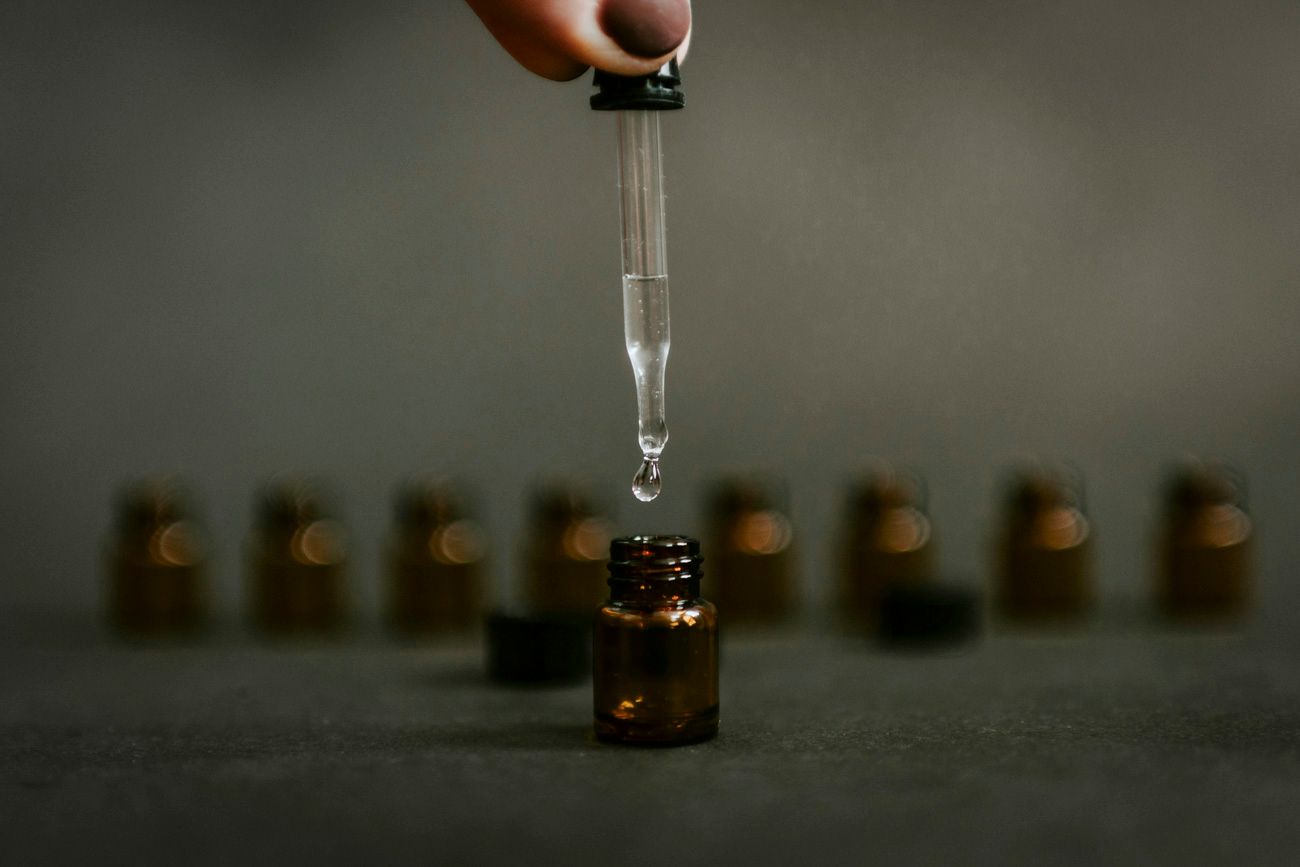
Bitters are almost always alcohol tinctures: herbs steeped in alcohol until the liquid takes on their flavor. The alcohol pulls the flavor out and keeps the result shelf-stable, which is why a bottle of bitters is 35 to 45% ABV. If you're skipping alcohol, for a sober bar, a dry month, or a batch of mocktails, you can still make bitters. Swap the spirit for food-grade vegetable glycerin.
What makes bitters non-alcoholic
In a normal bitters recipe, high-proof alcohol is the menstruum: the liquid you steep the herbs in. Non-alcoholic bitters replace it with vegetable glycerin (also sold as glycerine or glycerol), a clear, slightly sweet, syrupy liquid that still extracts and carries flavor. The herbs and the method stay the same. Only the liquid changes.
What you need
- Your herb blend: the same ingredients you'd use in alcoholic bitters, one bittering herb plus aromatics. A simple start is gentian for the bitter base, with orange peel and a warm spice on top. The formulator helps you dial a blend.
- Food-grade vegetable glycerin: the alcohol stand-in. Make sure it says food grade, not cosmetic.
- Water: glycerin on its own is too thick to extract well, so you thin it.
Mix the liquid at roughly 3 parts glycerin to 1 part water. That's enough glycerin to preserve the finished bitters, and thin enough to pull flavor. Use about 100 mL for 20 g of herbs, the same ratio as the main guide.
Tools
- A clean jar with a tight lid.
- A strainer or cheesecloth, and a muslin bag if you have one.
- A small bottle for the finished bitters, ideally with a dropper or dasher top.
How to make it
- Prep the herbs. Crack or break the hard pieces (roots, bark, spice) so the liquid can reach the surface. Don't grind to powder.
- Mix the glycerin and water at about 3 to 1.
- Cover the herbs in the jar, fully submerged.
- Steep two to four weeks somewhere warm, shaking daily. Glycerin extracts more slowly than alcohol, so warmth and time help. To speed it up, stand the sealed jar in a warm water bath for a few hours.
- Taste and strain. When the flavor is where you want it, strain through cheesecloth and squeeze out every drop.
- Bottle and refrigerate. Use a clean bottle, keep it in the fridge, and use it within a few months.
How well does it actually work?
Close, but not identical. A few things to know going in:
- It's gentler. Glycerin is a weaker solvent than high-proof alcohol. It pulls water-soluble flavors well but less of the sharp oils and resins, so the result is softer and less bracing.
- It's sweeter. Glycerin is naturally a little sweet, so these read rounder and less dry than the alcoholic version. That can be a plus in a mocktail.
- It doesn't keep as long. Alcohol is a strong preservative and glycerin is a weaker one, so make smaller batches.
For mocktails and anyone avoiding alcohol, they do the job well. Side by side, a purist will notice they're a touch softer than the real thing.
Using them
Use them like regular bitters: a few dashes to season a drink. They shine in alcohol-free cocktails, where a dash of bitters keeps a mocktail from tasting like flat juice. They also work in a regular cocktail if you don't want to add any more alcohol.
Going alcohol-free doesn't change the herbs. The cautions on each herb page, including the ones for pregnancy, still apply.
If you'd rather buy than make, several brands sell glycerin-based non-alcoholic bitters.