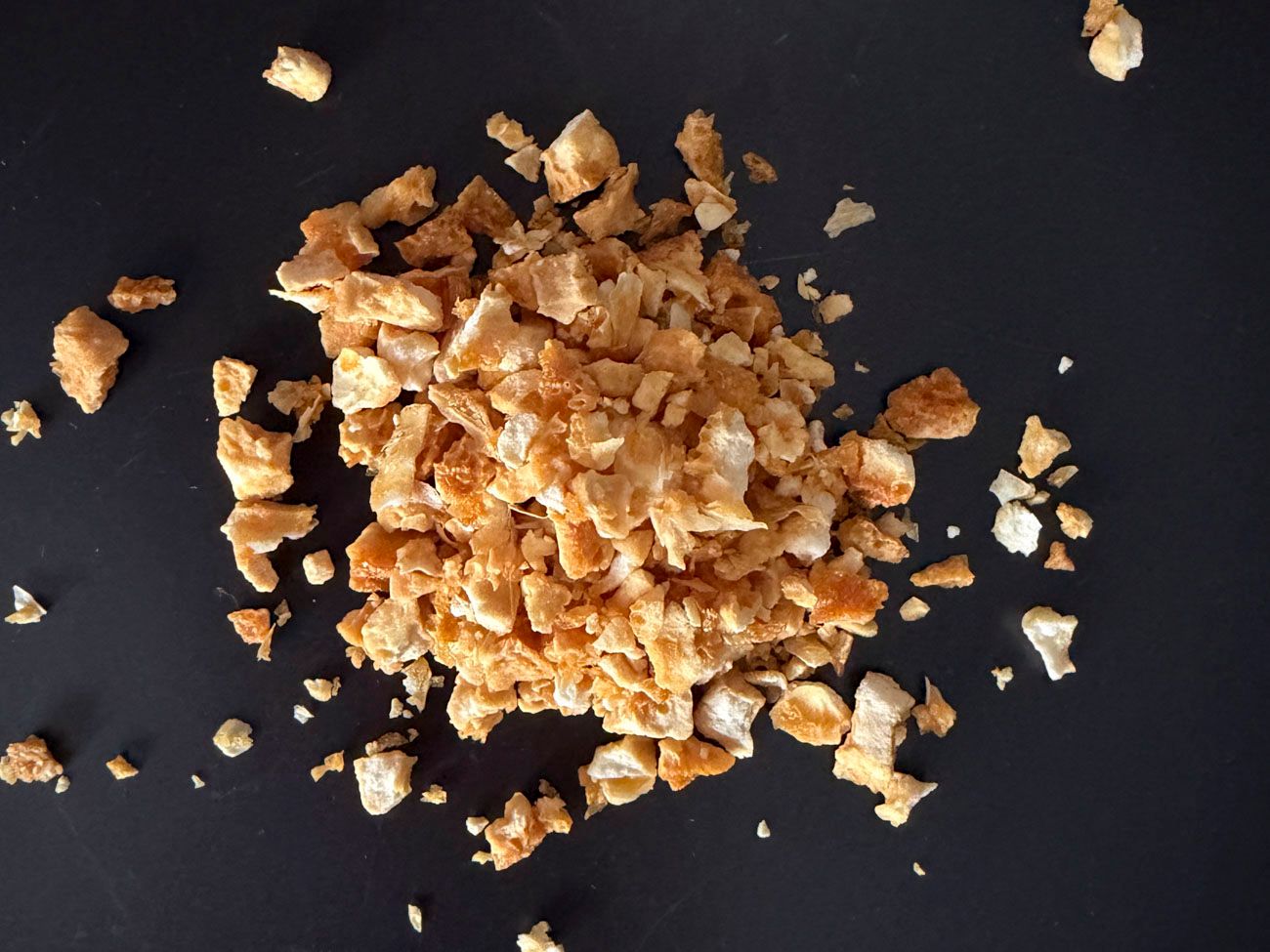
Orange peel is the bright top note in a lot of classic cocktails. It's the twist you squeeze over an Old Fashioned to spray its oils across the drink. It's the backbone of orange bitters. A bittering root like gentian brings the bitter base, and orange peel brings the lift: the fragrant citrus-oil brightness that keeps bitters from tasting flat or medicinal.
Orange peel is an aromatic, meaning an ingredient that adds scent and flavor instead of bitterness. If you're building your own bitters, it's a good first one to try. It makes almost any blend taste rounder and more finished.
What orange peel tastes like
Orange peel's flavor is bright, sweet, and distinctly citrus: almost all fragrant oil, with very little real bitterness of its own. That oil lives in the colored outer zest. The white layer underneath is the pith, and it's where the harsh, astringent bitterness hides. That's why you want the zest and not the pith.
Dried peel tastes deeper and a little candied, closer to marmalade than to fresh fruit. Drying concentrates the oils and softens the sharp top notes. Orange peel reads as sweetness and perfume more than taste, which is why it balances a bitter base so well.
First-hand note. Tasting my own single-herb orange-peel tincture at 5 drops, it read almost all citrus (a 5 on my 0–5 scale), with a light floral lift (3), a little sweetness (2), and barely any bitterness (1). The orange-zest aroma was faint, and so was the first taste. On a second pass it came forward more: a touch more bitter, and clearly citrusy. A single-herb tincture reads milder than the oil you get from a fresh peel.
Fresh vs dried, and which orange
A few choices change the result:
- Dried orange peel for the jar. Dried orange peel is concentrated, shelf-stable, and doesn't add water that can spoil a batch. Fresh zest is for the twist over a finished drink.
- Skip the pith. Whether you buy dried peel or dry your own, you want the colored zest with as little white as possible. Pith adds a dull bitterness, and it's the wrong kind.
- Bitter vs sweet orange. Bitter (Seville) orange peel is the traditional choice for orange bitters. It's sharper and more aromatic, with a real edge. Sweet orange peel is rounder and much easier to find. Both work. Bitter orange tastes more like classic orange bitters, and sweet orange is more approachable.
Drying your own is easy. Use organic or unwaxed fruit, or scrub it well, since conventional citrus is often waxed. Peel thin strips of zest and let them dry until they're brittle.
How to use it in bitters
Build orange peel on top of a bitter base instead of counting on it for bitterness. A classic aromatic bitters is simple: a bittering root for the edge, orange peel for lift, and warm spice to fill the middle.
In the Old Fashioned bitters recipe, it's the largest amount in the jar: 8 g of dried peel, twice the gentian. In the formulator, it's the accent to reach for when a blend tastes flat, too bitter, or one-note. It pairs well with gentian and warm spices like cardamom and cinnamon.
Where to buy it
Buy dried orange peel from a spice shop or herb supplier, or dry your own from organic or unwaxed fruit (see above). If you're buying it, check the label for bitter or sweet so you know what's going in the jar: bitter Seville peel for classic orange bitters, sweet orange for something rounder and easier to find. Bitter orange supplements are a different, far more concentrated product, so don't reach for those.
A note on safety
For most people, a dash or two of orange bitters isn't a concern. Orange peel is in products people use all the time. But bitter orange has real cautions, and some people should avoid it:
- Skip it if you're pregnant or breastfeeding. Safety information is limited, so it's generally advised against.
- If you take stimulant medication, check first. Bitter orange contains synephrine, a stimulant related to ephedrine, and it can add to the effect of stimulants.
- If your medication carries a grapefruit warning, check first. Bitter orange contains compounds that can interact with the same medications grapefruit does.
Most of these concerns come from supplements and concentrated extracts, and a few dashes of bitters is a small amount. Sweet orange peel is the lower-concern choice.
None of this is medical advice, and it isn't a complete list. If you take any medication regularly or have a health condition, run it by your pharmacist or a drug-interaction checker before using bitter orange as anything more than an occasional cocktail bitter.
Traditional uses
Bitter orange peel has traditionally been used as a digestive aromatic. The German Commission E recognized it as a traditional remedy for loss of appetite and mild digestive complaints. That recognition rests on long-standing use, not modern clinical trials, and it's the same bitter-aromatic logic behind most traditional bitters.
That's traditional use, not proven benefit. Orange peel earns its place on this site as a flavor. The history is context, not a health claim.
Where you've already had it
You already know this taste. It's in orange bitters, in Cointreau and triple sec, in marmalade, and in the oils that spray off a twist when it hits the surface of a drink.
Sources
- American Botanical Council — Commission E Monographs: Bitter Orange Peel. https://www.herbalgram.org/resources/commission-e-monographs/monograph-approved-herbs/bitter-orange-peel/
- National Center for Complementary and Integrative Health (NIH) — Bitter Orange: Usefulness and Safety. https://www.nccih.nih.gov/health/bitter-orange