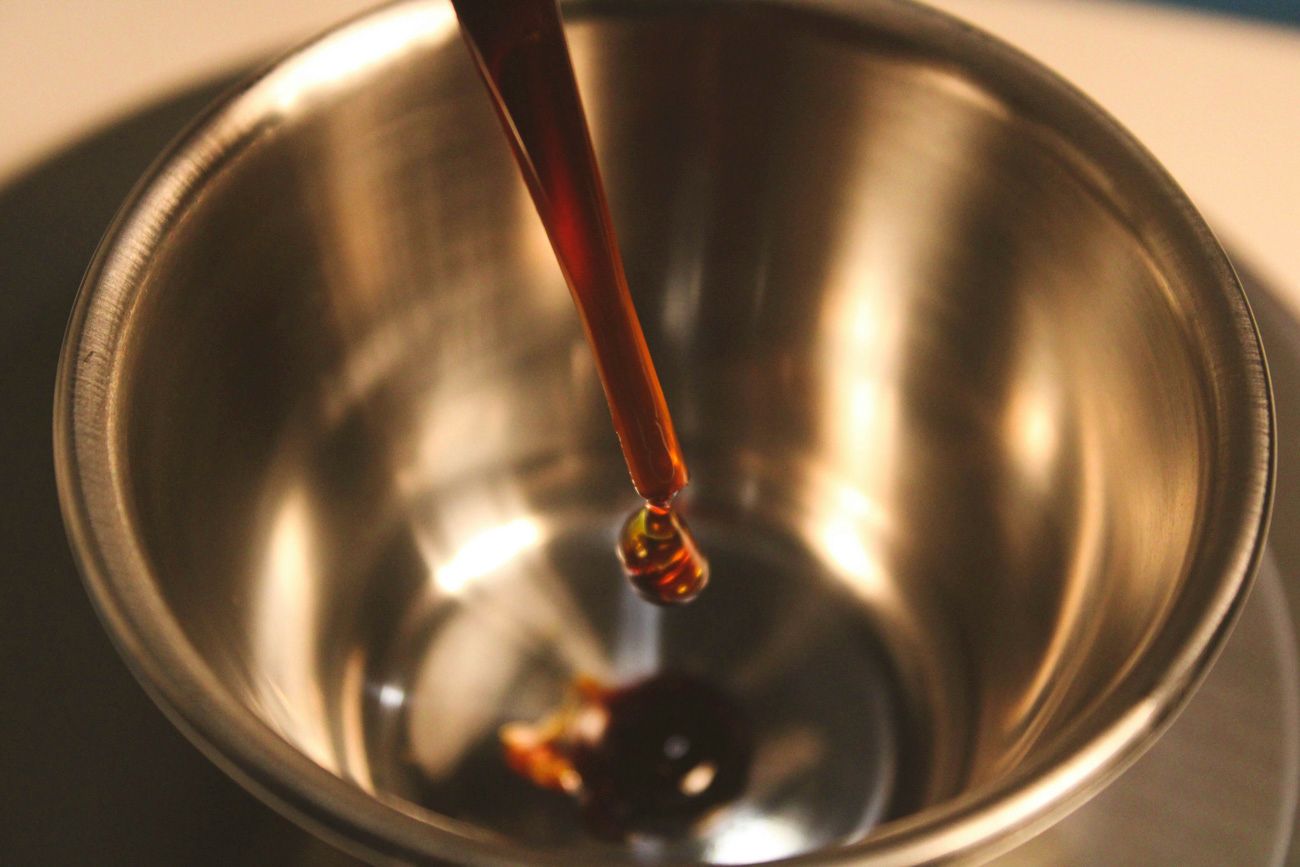
Bitters are high-proof. Most bottles run 35 to 45% alcohol by volume (ABV), about the same as whiskey or gin. That catches people off guard, because you'd never drink them straight. But the number is almost beside the point. You use bitters a dash at a time, so the alcohol they add to a drink is tiny.
How much alcohol is in a bottle of bitters
Bitters are alcohol tinctures, meaning herbs steeped in alcohol. The alcohol is the solvent that pulls flavor out of the herbs and keeps the result shelf-stable, so a high proof is the whole point, not an accident. Angostura, the benchmark bottle, is 44.7% ABV. Most commercial bitters land in that 35 to 45% range, and a few aromatic ones climb past 50%.
If you make your own, the proof is roughly whatever base spirit you steeped in. Bitters made with 120-proof Everclear start around 60% ABV and settle a little lower as the herbs give up their water.
How much does a dash actually add?
Almost nothing. A dash is around 0.6 mL, so two dashes is a fraction of a teaspoon. At 45% ABV, that's about half a milliliter of pure alcohol. A drink with 2 oz of 40% whiskey already has around 24 mL, so next to the whiskey, the bitters are a rounding error.
Can you get drunk on bitters?
Not in any realistic way. One US standard drink has about 17.7 mL of pure alcohol. At 45% ABV, you'd need roughly 1.3 oz of bitters to get that, about a third of a standard 4-ounce bottle, and bitters are far too bitter to drink like that. As they're actually used, a dash or two per cocktail, they don't move the needle.
Why bitters aren't sold like liquor
Here's the odd part: a bottle of Angostura sits on a grocery shelf next to the vanilla extract, not behind the liquor counter. That's because regulators generally treat aromatic bitters as a non-beverage flavoring, a food rather than a drink, since nobody drinks something that bitter for the buzz. Pure vanilla extract, around 35% ABV, gets the same treatment. Rules vary by country and state, but that food classification is why bitters usually skip the age checks and liquor taxes that spirits carry.
If you want the flavor without the alcohol
Non-alcoholic bitters exist. They use food-grade glycerin instead of spirit, which still carries flavor without the proof. Glycerin is slightly sweet and less sharp, so they taste a little softer, but for a dash in a mocktail they do the job. You can make them yourself with the same steeping method: here's how.
What this means for your own bitters
If you're steeping your own, the alcohol content takes care of itself. Your bitters are about as strong as the spirit you used, and because you dose by the dash, the proof never matters in the finished drink. Choose your base spirit for flavor and extraction instead. A higher proof pulls more oil out of spice and peel.