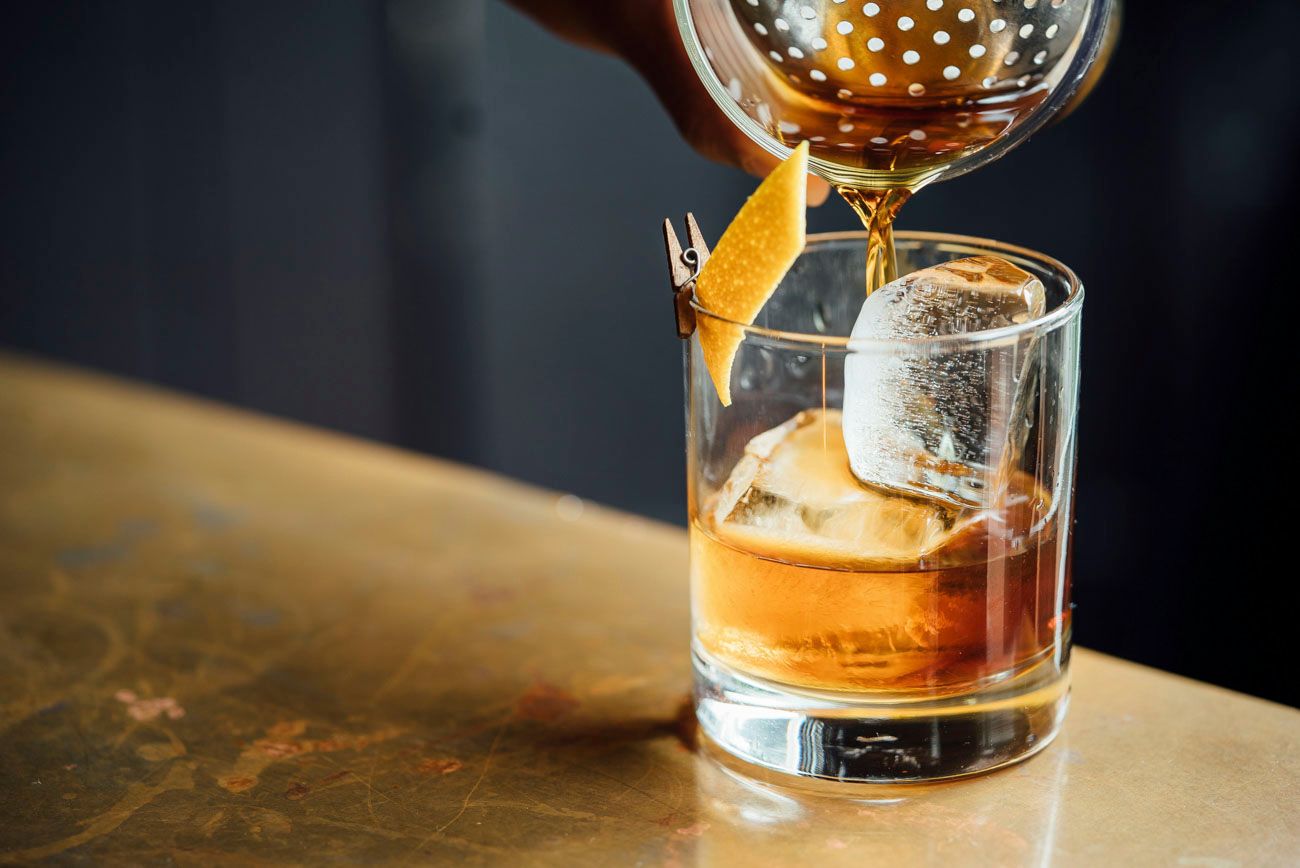
The bitters in an Old Fashioned are the part almost nobody thinks to make themselves. Which is a shame, because it's where homemade makes the biggest difference. And it's far easier than it sounds. You're steeping a few herbs in alcohol and waiting a couple of weeks. That's the whole thing.
Here's how to make a batch of aromatic bitters for an Old Fashioned.
What bitters actually are
Bitters are a tincture. That means herbs steeped in alcohol until the liquid takes on their flavor. For an Old Fashioned, you want aromatic bitters. That comes down to two roles: one bittering herb for the drink's edge, and a handful of aromatics for the warm, orange-y spice on top.
What you need
A simple starting recipe, in the rough proportions a classic aromatic bitters uses. Gentian brings the bitterness, orange peel brings the signature note, and the spices round it out.
- Orange peel (2 parts): bright citrus, the classic Old Fashioned note.
- Gentian root (1 part): the bittering herb, and the bitter base. (More on gentian)
- Cinnamon (1 part): warm and a little sweet.
- Cardamom (1 part): warm, aromatic spice.
A rule of thumb worth knowing: the bittering herb usually makes up somewhere between 10% and 50% of a bitters blend. Here it's about 20%. Push it higher if you want more bite. A couple of cloves, a piece of vanilla, or a dried cherry are easy add-ons once you've got the basics down.
For the alcohol, a neutral high-proof spirit like Everclear pulls the most flavor, especially the aromatic oils in the peel and spices. A strong bourbon or rye works too, and adds its own character. Aim for at least 80 proof (40%). Higher extracts the spices better. Cover the herbs with about five times their weight in spirit. For a small batch, that's around 20 g of herbs to 100 mL.
You don't have to be exact. Eyeball it and adjust next time, or weigh everything if you want to make the same batch twice. Weighed out, a 20 g batch is 8 g orange peel and 4 g each of gentian, cinnamon, and cardamom, in 100 mL of spirit. That kind of precise starting point is what the formulator is built to help you dial in.
Tools
- A clean jar with a tight lid.
- A small muslin bag (optional, but it makes straining painless).
- A strainer or cheesecloth.
- A bottle for the finished bitters. A dropper or dasher top makes them easy to use.
How to make it
- Break up the hard stuff. Crack or roughly break the gentian, cardamom, and cinnamon so the alcohol can reach the surface. Don't grind them to powder. That just makes straining a mess.
- Add the herbs to the jar. If you're using a muslin bag, load the herbs into it first, then drop the bag in the jar. No bag? Just add them to the jar loose.
- Cover with alcohol. Everything should be fully submerged. Anything poking above the surface isn't steeping.
- Seal it and wait. Keep it somewhere dark and give it a shake once a day, or a few times a week. Let it steep two to four weeks.
- Taste as you go. After a couple of weeks, put a drop on a spoon. When the bitterness and spice are where you want them, it's ready. Longer means stronger.
- Strain and bottle. Pour it through the muslin or cheesecloth, squeeze out every last drop, and funnel it into your bottle.
Using them
A few dashes per drink is all you need. Bitters are concentrated, so a little goes a long way. In an Old Fashioned: a couple of dashes with the whiskey and sweetness, stir, and twist an orange peel over the top.
Make it your own
Once you've made one batch, you'll want to tweak it. More orange for brightness, more spice for warmth, a different bittering herb for a new character. That's the whole point of making your own: you can dial it in exactly to your taste. No bottle off the shelf will ever do that for you.