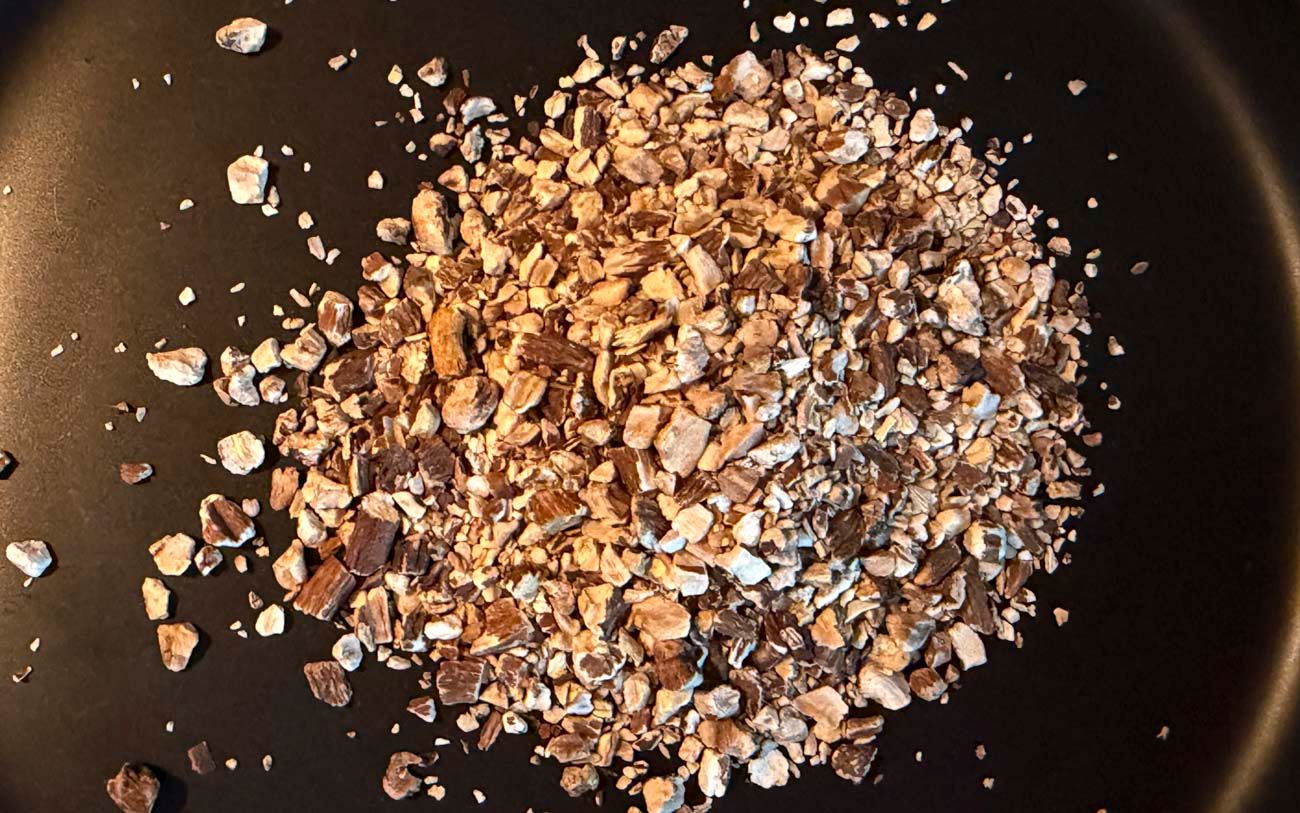
Dandelion root is the gentle cousin to gentian in the bittering world. It's the root of the same weed that turns up in your lawn (Taraxacum officinale), and it's been used in teas and digestive tonics for centuries. In bitters, it gives an earthy, rounded bitterness.
It's a bittering agent, meaning the herb that supplies the bitterness in a blend, and one of the friendlier ones to start with.
What dandelion root tastes like
Dandelion root's flavor is earthy and mildly bitter, with a gentle warmth and a little natural sweetness underneath. It's rounder and less aggressive than gentian. The bitterness is there, but it sits lower and doesn't dominate.
It comes two ways, and they taste different:
- Raw (dried) root is earthy and woody, with a gentle warmth and a faintly nutty edge.
- Roasted root leans dark and toasty, with a coffee-or-cocoa note.
First-hand note. My single-herb dandelion tincture, made from raw chopped root, came out mild. The lead was an earthy, woody note (a 4 on my 0–5 scale), with a gentle warmth and a green edge behind it (both 3), only light bitterness (2), and a touch of sweetness (2). On the nose it was warm and a little creamy, almost nutty, though the spirit came through as much as the root. It was gentle enough that even at 18 drops in 15 mL of water it barely registered, so I scored it close to neat, where a slight spicy kick turned up on the finish.
How to use it in bitters
Dandelion is a gentle bittering base, so it's a good choice if gentian is too sharp for you. It can carry the bitter role in a mellow blend on its own, or sit under gentian as an earthy supporting note. Like other bittering herbs, it's usually somewhere between 10% and 50% of a blend.
Pick raw or roasted for the character you want. Raw keeps a blend green and earthy. Roasted adds coffee-and-cocoa depth, which suits darker, dessert-leaning, or fall bitters. In the formulator it's a mild-bitter option. It pairs well with orange peel and warm spices.
Where to buy it
Buy dried, cut-and-sifted dandelion root from a reputable herb supplier, labeled Taraxacum officinale. It's sold raw or roasted (roasted is often labeled "roasted dandelion root" or "dandelion coffee"), so pick the one that matches the flavor you're after.
You can forage it, since it's the common lawn weed. Only do it from ground you know is free of pesticides, herbicides, and roadside runoff, and only if you're sure of the identification. Buying labeled root is simpler.
A note on safety
For most people, dandelion in cocktail bitters isn't a concern. The greens go in salads and the root into teas and coffee substitutes, so it's a common food. But it has real cautions, and some people should avoid it:
- Skip it if you're allergic to ragweed, daisies, marigolds, or chrysanthemums. Dandelion is in the same plant family (Asteraceae), and cross-reactions happen.
- Avoid it if you have gallstones, a bile duct obstruction, or other gallbladder problems. Dandelion stimulates bile flow, which is the opposite of what those conditions need. Check with a professional first.
- If you take a diuretic ("water pill"), a blood thinner, or diabetes medication, check first. Dandelion has a traditional diuretic effect, and there are theoretical reasons it could interact with these.
- If you're pregnant or breastfeeding, leave it out. Safety hasn't been established, and reference bodies advise against medicinal use. Culinary amounts are considered a separate matter.
None of this is medical advice, and it isn't a complete list. If you take any medication regularly or have a health condition, run it by your pharmacist or a drug-interaction checker before using dandelion as anything more than an occasional cocktail bitter.
Traditional uses
Dandelion is one of the classic European digestive tonics, used much the way gentian and the other bitter roots were. The EMA recognizes dandelion root with herb as a traditional herbal medicinal product for indigestion, including bloating and flatulence. It also recognizes it for increasing urine flow in minor urinary complaints. Both rest on long-standing use rather than modern clinical trials.
The proposed mechanism is the familiar one: the bitter taste is thought to stimulate appetite and digestion.
That's traditional use, not proven benefit. On this site, dandelion earns its place as a flavor. The medicinal history is context, not a health claim.
Where you've already had it
If you've had roasted dandelion "coffee," dandelion tea, or a bottle of dandelion and burdock soda, you've already met it. And if you've ever weeded a lawn, you've held the whole plant.
Sources
- European Medicines Agency — Taraxaci radix cum herba (dandelion root with herb): herbal medicinal product. https://www.ema.europa.eu/en/medicines/herbal/taraxaci-radix-cum-herba
- National Center for Complementary and Integrative Health (NIH) — Dandelion. https://www.nccih.nih.gov/health/dandelion