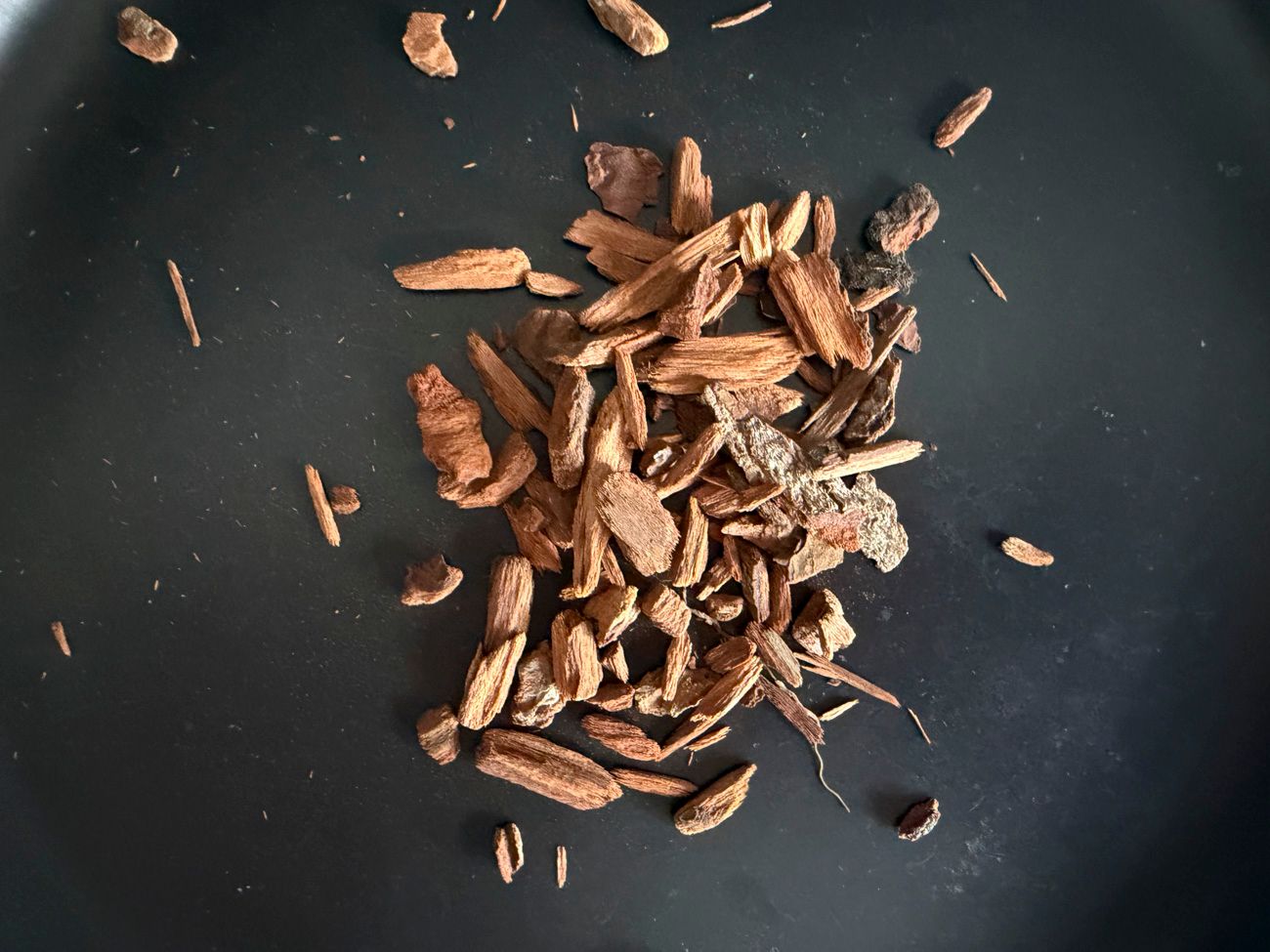
Cinchona bark is where quinine comes from. It's the bark of the South American Cinchona tree and the bitter, drying backbone of tonic water. It's also the most potent and most serious herb on this site, so start with the safety section before you do anything with it.
What cinchona bark tastes like
Cinchona bark's flavor is sharp, clean quinine bitterness: the exact bitter, drying note of tonic water, over a dense, barky, earthy base. It's more aggressive and more drying than gentian, and the bitterness hangs around. It's a bittering agent, meaning the herb that supplies a blend's bitterness, and it's the strongest one here.
First-hand note. My single-herb cinchona tincture was the most bitter of everything I steeped, a 5 on my 0–5 scale, over an earthy, woody base (3). The smell caught me off guard: sweet, almost licorice, like Jägermeister. On a second taste the bitterness turned sharp and almost metallic. I kept it to 2 drops, half what I used for the other herbs, because it's that strong.
How to use it in bitters
Use less than you would of any other bittering herb, and taste as you go. A tiny amount gives a blend clean tonic-water bitterness and a dry finish. A little more takes over fast. In the formulator it's flagged to use by the dash. Orange peel pairs well with it and softens the edge.
Where to buy it
Buy cut or powdered cinchona bark (Cinchonae cortex) from a reputable herb supplier that labels the species. It's sold as a bittering herb and for making tonic, so it isn't hard to find. Buy from a seller you trust: potency varies by source, and with an herb this strong you want to know what you're starting with.
A note on safety
Cinchona is the one to respect. It's the natural source of quinine, a real drug with real risks.
- Don't use it if you're pregnant or breastfeeding. Quinine carries pregnancy risks.
- Skip it if you have a heart-rhythm condition, a bleeding or platelet disorder, or a history of reacting badly to quinine or tonic water. Quinine can cause serious blood, heart-rhythm, and allergic reactions in susceptible people.
- Taste tiny amounts, and never drink it in quantity. Too much quinine causes cinchonism: headache, ringing in the ears, nausea, and blurred vision. In serious cases quinine has caused life-threatening reactions, which is why the FDA restricted its use and warns against taking it casually.
The quinine in tonic water and in a dash of bitters is small and capped by regulators. Cinchona bark steeped directly is far more concentrated and varies from batch to batch.
None of this is medical advice, and it isn't a complete list. If you take any medication regularly or have a health condition, run it by your pharmacist or a drug-interaction checker before using cinchona as anything more than an occasional cocktail bitter.
Traditional uses
Cinchona's history runs deeper than digestion. Its bark was an early effective malaria treatment. It was carried to Europe from Peru in the 1600s, and the quinine refined from it stayed the standard antimalarial for centuries. The German Commission E also recognized cinchona bark as a traditional remedy for loss of appetite and indigestion, on the familiar bitter-tonic logic.
Those are traditional and historical uses, not health claims for bitters. Here, cinchona is a flavor: the dry bitterness of tonic water.
Where you've already had it
Every gin and tonic you've had was cinchona at work. That dry, bitter edge in the tonic is quinine, from this bark.
Sources
- Commission E (American Botanical Council) — Cinchona bark (Cinchonae cortex) monograph: traditional use for dyspeptic complaints. In the Commission E approved-herbs collection: https://www.herbalgram.org/resources/commission-e-monographs/monograph-approved-herbs/
- U.S. Food and Drug Administration — Serious risks associated with using quinine to prevent or treat nocturnal leg cramps. https://www.fda.gov/files/about%20fda/published/Serious-risks-associated-with-using-Quinine-to-prevent-or-treat-nocturnal-leg-cramps.pdf