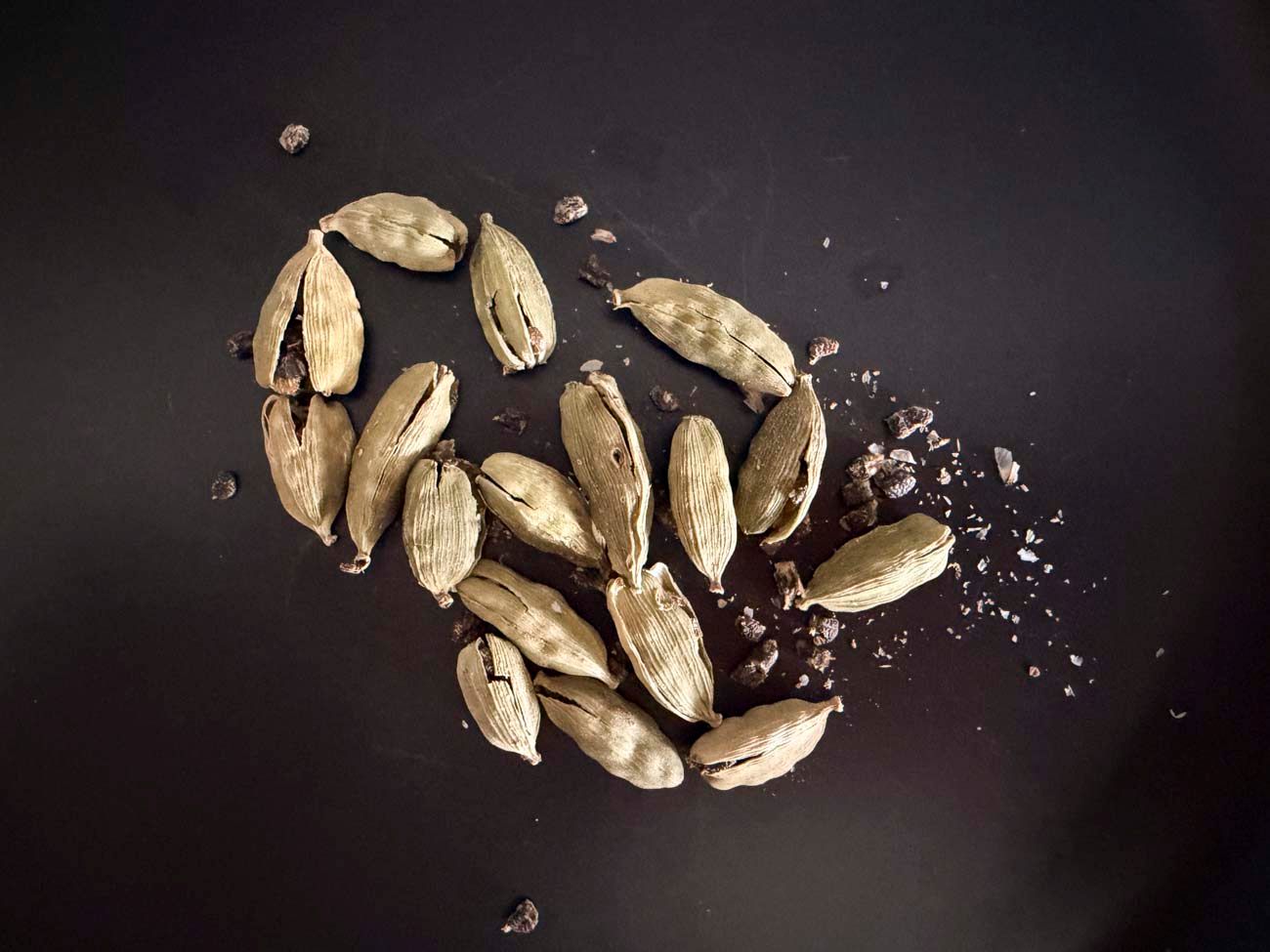
Cardamom is the dried seed pod of a tropical plant in the ginger family, and it's the warm, aromatic spice note in a bitters blend. Gentian brings the bitterness and orange peel brings the citrus lift. Cardamom brings warmth: a perfumed, slightly cooling spice that makes a blend taste finished instead of flat.
It's an aromatic, meaning an ingredient that adds scent and flavor instead of bitterness. A little goes a long way.
What cardamom tastes like
Cardamom's flavor is warm, sweet-spiced, and intensely aromatic, with a cool, almost eucalyptus lift sitting behind the warmth. It isn't bitter or sour. It reads as fragrant spice with a floral edge, closer to perfume than to heat, and the aroma lingers.
There are two kinds, and they're not interchangeable. Green cardamom is the bright, perfumed, menthol-cool one, and it's what you want for bitters. Black cardamom is dried over fire, so it's smoky and savory, better for stews than for a drink.
First-hand note. My single-herb cardamom tincture was all warm spice: a 5 for warm/spice on my 0–5 scale, a real floral edge (4), and a green, herbal undertone (3), with barely any bitterness. Both times I tasted it, the smell was intense and spicy, and the spice stayed in my mouth long after I swallowed. I scored it at 5 drops.
How to use it in bitters
Cardamom is the warm middle of a blend, between the bittering root and the citrus top note. In the Old Fashioned bitters recipe it's 4 g of cracked pods. In the formulator it's a potent accent, so reach for a small amount. It pairs naturally with gentian and orange peel, the trio at the heart of an Old Fashioned bitters.
Where to buy it
Buy whole green pods, not ground. Ground cardamom loses its aroma fast, and the aroma is the whole point, so crack the pods yourself when you use them. The regular grocery spice aisle carries them, and a spice shop or online spice seller will have fresher stock at a better price by weight.
A note on safety
For most people, cardamom in bitters isn't a concern. It's a common food spice, and a few dashes is far less than the concentrated medicinal doses most cautions are about. There's one traditional caution worth knowing:
- If you have gallstones, avoid large medicinal amounts. Cardamom can stimulate the gallbladder.
None of this is medical advice, and it isn't a complete list. If you take medication regularly or have a health condition, run it by your pharmacist or a drug-interaction checker before using cardamom as anything more than a culinary spice or an occasional cocktail bitter.
Traditional uses
Cardamom has a long history as a digestive aromatic across Ayurvedic, Middle Eastern, and European herbal traditions. The German Commission E recognized cardamom seed as a traditional remedy for indigestion. That's the same bitter-aromatic logic behind most traditional bitters, and it rests on long-standing use rather than modern clinical trials.
That's traditional use, not proven benefit. On this site, cardamom earns its place as a flavor. The history is context, not a health claim.
Where you've already had it
You already know this taste. It's in chai, cardamom buns and Scandinavian baking, Indian curries, Turkish coffee, and a lot of gin.
Sources
- Commission E (American Botanical Council) — Cardamom Seed (Cardamomi fructus) monograph: approved for dyspeptic complaints, contraindicated in gallstones. In the Commission E approved-herbs collection: https://www.herbalgram.org/resources/commission-e-monographs/monograph-approved-herbs/
- Commission E (American Botanical Council) — Approved contraindications index: Gallstones. https://www.herbalgram.org/resources/commission-e-monographs/therapeutic-indexes-approved-contraindications/liver-and-gallbladder/gallstones/