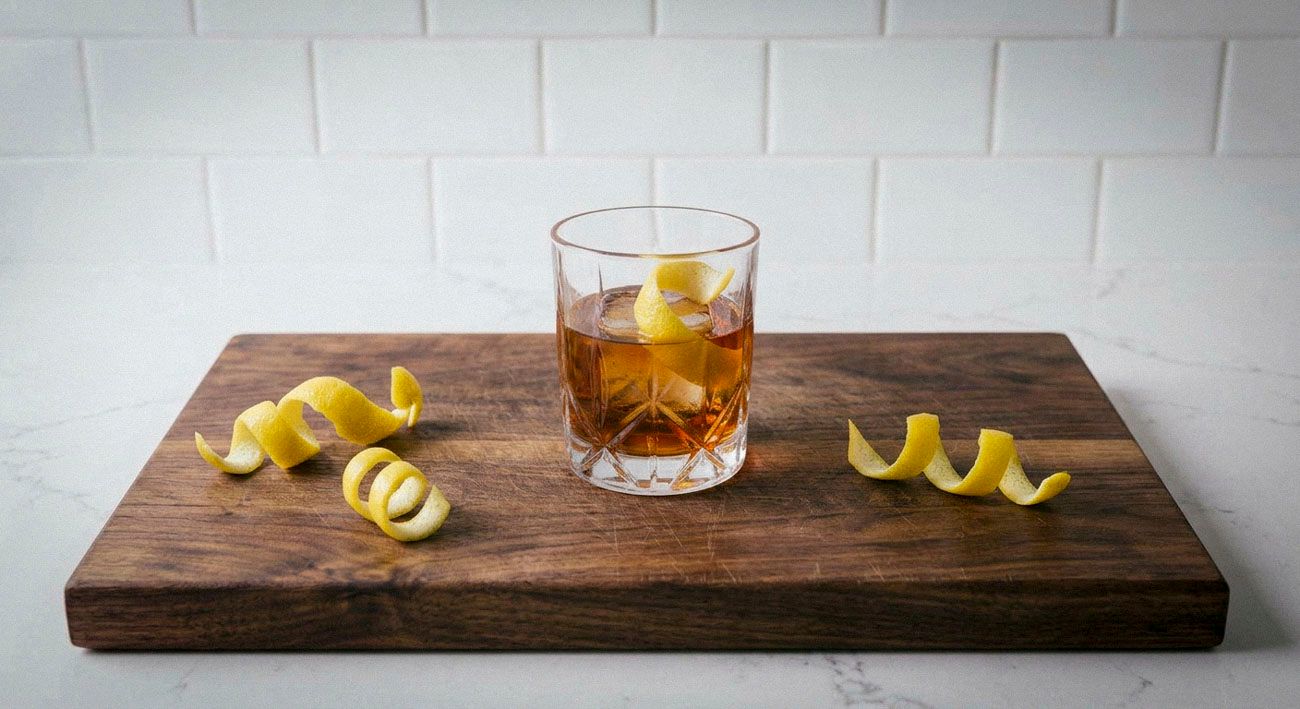
The Sazerac is one of the oldest cocktails in America, and it's a bitters drink through and through. Where an Old Fashioned uses a couple of dashes, the Sazerac is built on them: a good dose of Peychaud's bitters, a rinse of absinthe, and rye whiskey. It's bracing, aromatic, and a little theatrical to make.
If you already like an Old Fashioned, this is the natural next step. Same spirit-forward, stirred, no-nonsense idea, turned up and pointed straight at the bitters.
What you need
- 2 oz rye whiskey: rye is traditional, and its spice suits the drink. Bourbon works if that's what you have, a little softer and sweeter.
- 1 sugar cube (or about 1 teaspoon of simple syrup): just enough sweetness to balance the bitters.
- 3–4 dashes Peychaud's bitters: the signature. Peychaud's is lighter, and more anise-and-cherry, than Angostura, and it's what makes a Sazerac taste like a Sazerac.
- A dash of aromatic bitters (optional): some recipes add one for depth. Try it both ways.
- Absinthe, for the rinse: just a few drops to coat the glass. Herbsaint is the traditional New Orleans stand-in.
- A lemon peel: a wide strip, for the twist.
Tools
Two rocks glasses (one to chill, one to build in), or a rocks glass and a mixing glass. A bar spoon, and a peeler or paring knife for the twist.
How to make it
- Chill a rocks glass. Fill it with ice and water and set it aside while you build the drink. A cold glass is part of how a Sazerac is served, because it goes in without ice.
- Muddle the sugar with the bitters. In the second glass, add the sugar cube, the Peychaud's (and the aromatic dash, if using), and a small splash of water. Muddle until the sugar breaks down.
- Add rye and ice, then stir. Pour in the whiskey, add ice, and stir for about 30 seconds, until it's cold.
- Rinse the chilled glass with absinthe. Tip out the ice and water, add a few drops of absinthe, swirl it around to coat the inside, and pour out the excess. You want the aroma, not a pour.
- Strain in the drink. Strain the rye into the absinthe-rinsed glass. No ice. It's served neat and cold.
- Twist the lemon peel over the top. Express the oils across the surface. Traditionally you discard the peel, but dropping it in is fine.
Why it's a bitters drink
Most cocktails treat bitters as a seasoning. The Sazerac treats them as a main ingredient. Three or four dashes of Peychaud's, plus the herbal hit of the absinthe rinse, are most of what you taste. It's the clearest example on the site of what bitters can do once you stop being shy with them.
Peychaud's is its own style, brighter and more anise-forward than the aromatic bitters you'd make for an Old Fashioned, so it's the one bottle here worth buying rather than making. But the craft behind it is the same idea: herbs steeped in alcohol. If you want to understand what's actually in the bottle, here's how bitters are made.
Make it yours
The Sazerac takes well to small changes. The oldest versions used cognac instead of rye, or a split of both, which softens it. A different absinthe or pastis shifts the herbal note. And if you find it too lean, a touch more sugar rounds it out without burying the bitters.