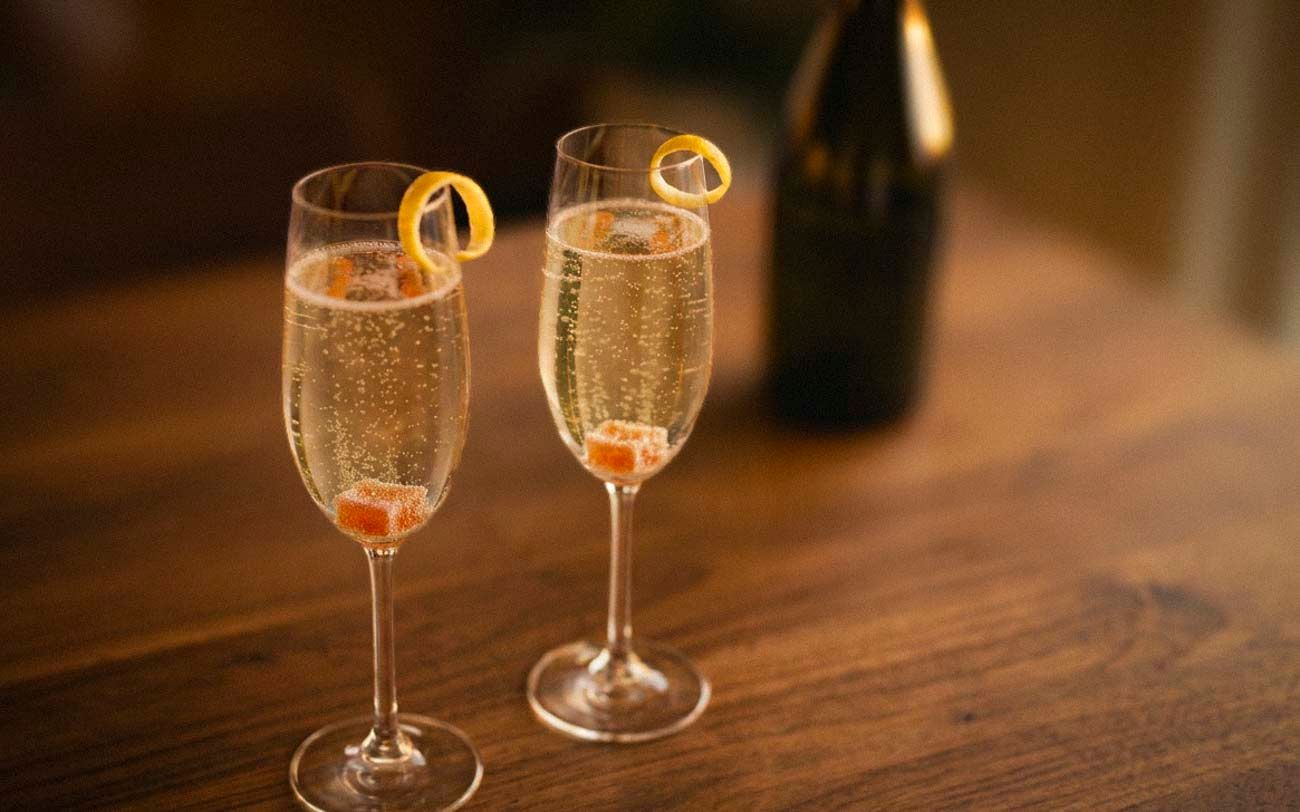
The Champagne cocktail is one of the oldest tricks for turning a glass of bubbles into an occasion. It's a sugar cube soaked in aromatic bitters, dropped into a flute, and topped with cold Champagne. That's the whole drink. It has been a New Year's Eve standby for more than a century, and it works because the bubbles carry the bitters' aroma up out of the glass, so every sip smells like spice and orange before it even tastes like wine.
Here's the part worth noticing if you make your own bitters. This drink is built on them. Take the bitters out and you have a glass of lightly sweetened Champagne. Put them back and it's a cocktail. There's no better example of what a few dashes actually do.
And it doesn't have to be New Year's. I'll drink bubbles just about any way they come: on their own, with a splash of orange juice on a slow morning, or dressed up in a cocktail like this one. This is just the version that feels like an occasion.
What's actually in it
Three ingredients make the drink: a sugar cube, bitters, and Champagne. A splash of cognac is the classic upgrade, and a lemon twist finishes the glass. It all comes together in the glass, with no shaker and no measuring. It looks like effort and takes about a minute.
What you need
Makes one glass.
- 1 sugar cube. The cube is traditional for a reason: it dissolves slowly and keeps feeding a little sweetness to the bubbles the whole time you drink. Half a teaspoon of sugar works if you don't have cubes.
- 2 to 3 dashes aromatic bitters. Angostura is the standard. Soak the cube until it's stained through. This is the flavor of the drink, so it's the one thing not to skimp on. (What aromatic bitters are, or make your own.)
- Chilled brut Champagne or dry sparkling wine, about 4 to 5 oz to fill the glass. Brut (dry) is right here, since the sugar cube brings its own sweetness. Cava, Crémant, or a dry Prosecco all work and cost a lot less than Champagne.
- A splash of cognac (optional), about a barspoon to half an ounce. It's traditional and adds a warm backbone under the wine.
- A lemon twist, to finish.
Tools
- A Champagne flute or a coupe.
- A peeler or a small knife for the twist.
That's the whole kit. A glass and a peeler.
How to make it
- Soak the sugar cube. Set the cube on a spoon or drop it straight in the glass, and dash the bitters over it until it's soaked through and gone pink-brown.
- Add the cube to the flute. Pour in the cognac now too, if you're using it.
- Top with cold Champagne. Pour slowly down the side of the glass so it doesn't foam over. The cube sinks and sends up a steady stream of bubbles from the bottom.
- Finish with the twist. Twist a strip of lemon peel over the glass to spray its oil across the top, then drop it in. Serve right away, while it's cold and lively.
The cube keeps the bubbles going and slowly sweetens the wine, so the last sip is a little rounder than the first.
Make it your own
- All Champagne, no cognac. Lighter and more about the wine. This is the common modern version.
- Orange bitters in place of, or alongside, the Angostura for a brighter, citrus-forward glass.
- A brandied cherry in the bottom instead of the twist, for a little color and a sweet last bite.
- Your own bitters. This is the drink to pour them into. A homemade aromatic or orange bitters shows off here more than it does buried in a stirred drink.
For a party
This scales better than almost any cocktail, which is what makes it a New Year's Eve fixture. Soak the sugar cubes with bitters ahead of time and line them up on a tray. When people arrive, drop a cube in each glass, pour the Champagne, and add a twist. There's no bottleneck at the bar, and everyone gets a drink that feels special.