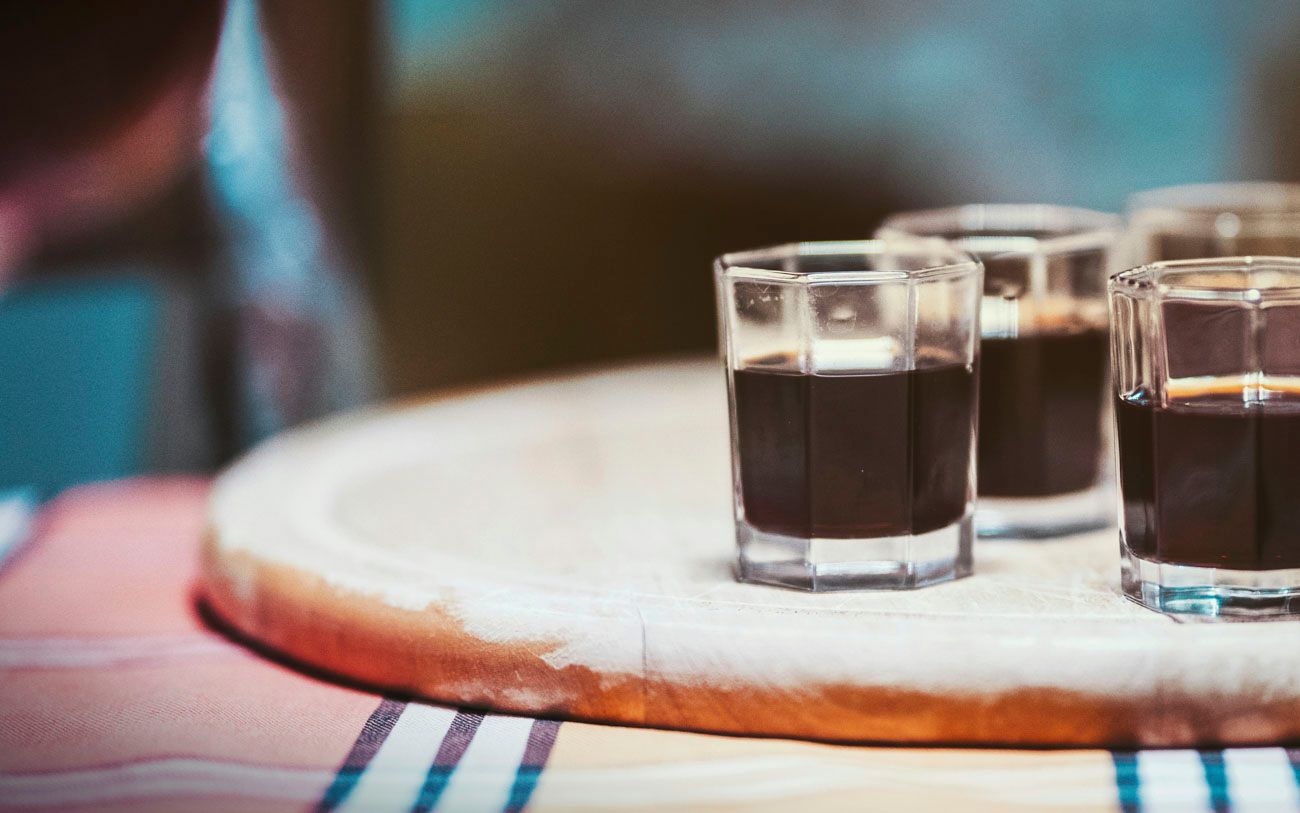
Fernet is the most intense style of amaro, the Italian word for "bitter" and the name for a bitter herbal liqueur traditionally drunk after a meal as a digestivo. It's the driest and most bitter of the bunch: dark, minty, and herbal, and people either love it or pull a face. If you've ever watched a bartender knock back a shot of something black at the end of a shift, it was almost certainly fernet.
On a site about bitters, fernet is worth knowing because it's the same idea taken all the way. Cocktail bitters are a big dose of bittering herbs steeped in alcohol, used a dash at a time. Fernet is a big dose of bittering herbs steeped in alcohol that you drink by the glass. One is a seasoning, and the other is the whole plate. (If you want the seasoning version, start with what bitters are.)
What fernet tastes like
Fernet's flavor is aggressively bitter, with a big cooling menthol-and-mint blast and a dark, medicinal, herbal depth underneath. Unlike sweeter amari, it's barely sweet at all, so the bitterness has nowhere to hide. The benchmark bottle, Fernet-Branca, leans hard into menthol and a bitter, earthy, almost myrrh-like character. It's polarizing on purpose. The first sip is a lot, and by the third you either get it or you don't.
I used to recoil from fernet. I never liked licorice, and that menthol-and-anise note is the first thing it throws at you. What changed wasn't the drink. It was how I drank it. Instead of bracing against it, I started smelling it first and letting the flavor unfold, the way you would with a wine. Somewhere in there it clicked, and now I'll gladly accept a glass.
What's in it
Fernet is made from a blend of herbs, roots, and spices macerated in grape spirit, then usually aged in barrels. The exact recipes are famously secret, but the botanicals commonly associated with the style include myrrh, rhubarb, chamomile, cardamom, aloe, saffron, peppermint, and gentian. That last one matters here: gentian is one of the same bittering roots behind a bottle of aromatic bitters, which is a big part of why fernet and your bitters taste like cousins.
Fernet versus other amari
Amaro is a wide family, and fernet sits at the bitter, dry, high-menthol end of it. Sweeter, rounder amari like Averna, Montenegro, and Ramazzotti are much easier first sips. If you've tried one of those and found fernet a shock, that's the style doing its job, not a bad bottle.
A few you'll see:
- Fernet-Branca is the original and the standard, made in Milan since 1845.
- Branca Menta is its sweeter, mintier sibling, a gentler way in.
- Fernet-Vallet (Mexico) and a growing set of craft American fernets (Leopold Bros and others) each put their own spin on the style.
How strong is it?
Fernet-Branca is 39% ABV, and most fernets land right around 40%, about the same as whiskey or gin. It drinks like a bitter liqueur, not a soft after-dinner sipper, so a small pour goes a long way.
How to drink it
- Neat and chilled, as a digestivo after dinner. It's the traditional way, and the one that shows you what the fuss is about.
- Fernet and Coke, known as a Fernandito, which is practically a national drink in Argentina. The cola's sweetness tames the bitterness beautifully.
- In cocktails, where it behaves a lot like bitters. The Hanky Panky (gin, sweet vermouth, a barspoon of fernet) and the Toronto (rye and fernet) are the classics, and a few dashes of fernet will season almost any stirred drink the way aromatic bitters do.
There's also the "bartender's handshake," the industry habit of greeting an off-duty bartender with a shot of fernet. It's less about the taste than the club it signals you're in.
How it connects to your bitters
Fernet is the bridge between a bottle of cocktail bitters and a drink you sip, dosed to drink neat instead of by the dash. If you make your own bitters, fernet is what the maximalist end of that same craft looks like.
One last thing people always ask: it's said "fer-NET," with the T pronounced.